If your mind feels tired even after sleeping… if anxiety shows up without warning… and if emotions feel heavier than words — this blog is for you.
Anxiety and depression don’t always scream.
Sometimes they whisper — through overthinking, tight shoulders, restless sleep, or a constant feeling of “something is off.”
In recent years, sound healing therapy has quietly entered this conversation. Not as a “magic cure,” but as a gentle, supportive therapy people are turning to when stress feels overwhelming.
But the real question is:
Can sound healing really help anxiety & depression — or is it just another wellness trend?
Let’s break it down with science, real benefits, and actual experiences, without hype or false promises.
What Is Sound Healing Therapy?
Sound healing therapy uses specific sounds and vibrations to help the nervous system relax and rebalance.
These sounds may come from:
- Singing bowls
- Tuning forks
- Gongs
- Gentle frequency-based instruments
Your body is mostly water, and sound travels extremely well through water. That’s why vibrations can create a deep calming effect, even when the mind feels busy.
Think of sound healing as:
A nervous system reset — not talk therapy, not medication, but deep relaxation through sound.
The Science Behind Sound Healing for Anxiety & Depression
This is the part many blogs skip — but not this one.
How sound affects the brain
Scientific studies show that calming sound frequencies can:
- Slow down brain waves
- Activate the parasympathetic nervous system (rest & digest mode)
- Reduce cortisol (stress hormone)
- Improve heart rate variability
When anxiety or depression is present, the nervous system often stays in fight-or-flight mode. Sound healing helps gently guide it back to balance.
Brain wave connection
During a sound healing session, the brain often shifts into:
- Alpha waves → relaxed alertness
- Theta waves → deep calm, meditation, emotional release
These states are linked with:
- Reduced anxiety
- Improved mood
- Better emotional processing
Types of Sound Healing Used for Emotional Health
Different sounds support the body in different ways. Here are the most commonly used types:
1. Singing Bowl Therapy
- Produces rich, calming vibrations
- Helps quiet racing thoughts
- Great for anxiety and emotional fatigue
2. Tuning Fork Therapy
- Uses precise frequencies
- Works directly on the nervous system
- Often used for emotional balance and grounding
3. Gong Therapy
- Deep, immersive sound waves
- Helps release stored emotional tension
- Useful when stress feels “stuck” in the body
4. Frequency-Based Healing
- Uses specific frequencies linked to relaxation
- Supports mood regulation and mental clarity
Each method works differently, but the goal is the same: help your body feel safe again.
Benefits of Sound Healing for Anxiety & Depression
Here’s what people commonly experience over time:
Emotional Benefits
- Reduced anxiety and mental restlessness
- Improved emotional balance
- Feeling lighter, calmer, and more centered
Mental Benefits
- Clearer thinking
- Better focus
- Less overthinking
Physical Benefits (often connected to emotional stress)
- Relaxed muscles
- Better sleep quality
- Reduced fatigue
Many people say they feel calm without having to force calmness — and that’s the key difference.
Sound Healing Therapy in Mumbai for Anxiety & Depression
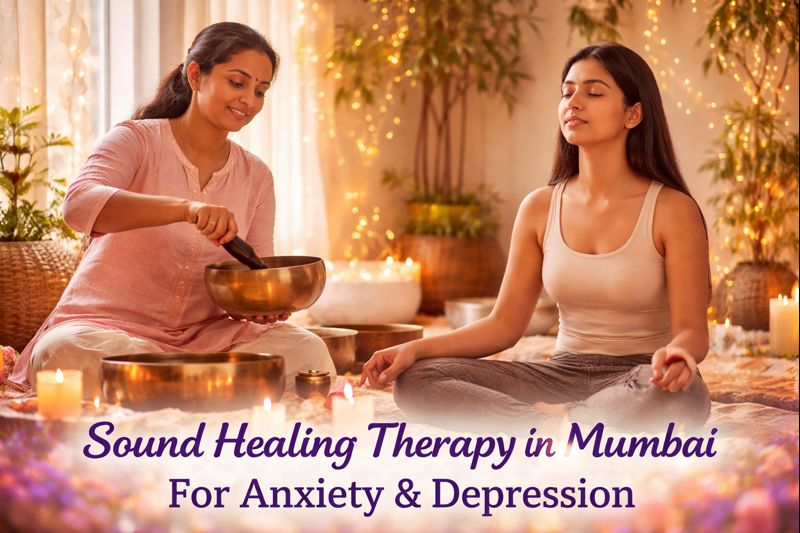
Mumbai’s fast pace, constant noise, deadlines, and digital overload keep the nervous system in survival mode. Sound healing therapy in Mumbai helps slow things down — not by forcing calm, but by allowing the body to relax naturally.
During a guided sound healing session:
- The nervous system shifts from fight-or-flight to rest-and-digest
- Brain waves slow down, supporting emotional balance
- Stored emotional tension begins to release gently
Why people in Mumbai choose sound healing:
- Non-invasive and drug-free approach
- Supports anxiety and emotional stress holistically
- Works well alongside therapy, yoga, or mindfulness
This makes sound healing especially helpful for professionals, creatives, caregivers, and anyone feeling emotionally overloaded in city life.
What Happens During a Sound Healing Session?
If you’re wondering what actually happens, here’s a simple breakdown:
- You lie down or sit comfortably
- The space is quiet and calming
- Sounds are played gently around or near you
- You don’t need to “do” anything — just listen
- The session usually lasts 45–60 minutes
Some people feel:
- Deep relaxation
- Emotional release
- Lightness or warmth
- Sometimes even a short nap
All reactions are normal.
Real Experiences: What People Actually Feel
People describe sound healing sessions as:
- “A deep calm I didn’t know my body needed”
- “My mind finally slowed down”
- “I slept better that night”
- “I felt emotionally lighter, without talking about everything”
Not every session feels dramatic — and that’s okay.
Sometimes the real changes are subtle but meaningful.
Is Sound Healing Safe for Anxiety & Depression?
Yes, sound healing is considered:
- Non-invasive
- Drug-free
- Gentle and safe
However:
- It should not replace therapy or medication if those are needed
- Always consult a professional if you have medical conditions like epilepsy or sound sensitivity
Sound healing works best as a supportive wellness practice, not a standalone cure.
Who Can Benefit Most from Sound Healing?
Sound healing may help if you:
- Feel emotionally overwhelmed
- Experience anxiety or low mood
- Have trouble relaxing or sleeping
- Want a natural, calming practice
It’s especially useful for people who find it hard to “switch off” mentally.
How Chaitali Healing Hubb Supports Emotional Healing Through Sound

At Chaitali Healing Hubb, sound healing sessions are designed with a deep understanding of emotional well-being and nervous system balance.
Sessions are facilitated by Chaitali, a trained sound healing practitioner who works with tuning forks, singing bowls, and therapeutic frequencies to support anxiety relief and emotional grounding.
What makes sessions at Chaitali Healing Hubb different:
- Personalized approach based on emotional needs
- Calm, safe, and non-judgmental healing space
- Focus on emotional balance, not just relaxation
Frequently Asked Questions
What is sound healing?
Sound healing is a holistic therapy that uses specific sound frequencies and vibrations to help calm the mind, relax the body, and restore emotional and energetic balance naturally.
What are the benefits of sound healing?
Sound healing may help reduce stress, improve sleep, calm anxiety, release emotional blockages, enhance focus, and create a deep sense of inner balance and relaxation.
What can I expect during a sound healing session?
You’ll lie down comfortably in a calm space while therapeutic sounds gently guide your body into deep relaxation. There’s no effort required—just rest and receive.
How can I book my session?
You can book your session easily through our website, WhatsApp, or by calling directly. Once booked, you’ll receive guidance on timing and preparation.
How do I need to prepare before or after the session?
No special preparation is required. Simply arrive relaxed and hydrated. After the session, it’s recommended to rest, drink water, and allow emotions to settle naturally.
Is sound healing safe?
Yes, sound healing is a gentle, non-invasive, and drug-free practice. It works naturally with the body and is generally safe for most individuals.
Is sound healing good for anxiety?
Yes. Many people experience reduced anxiety due to deep nervous system relaxation.
How soon will I feel the results?
Some feel calm immediately; others notice gradual changes over time.
Ready to Experience Sound Healing for Yourself?
If you’re curious to explore sound healing in a safe, guided environment,
Chaitali Healing Hubb offers personalized sessions designed to support emotional well-being naturally.
Book a session and let your body experience calm — not force it.

Chaitali Parekh is a certified sound healing practitioner and holistic wellness expert offering sound healing therapy in Mumbai. She specializes in tuning fork therapy, vibrational healing, and personalized energy balancing sessions that help reduce stress, improve sleep, and support emotional well-being.