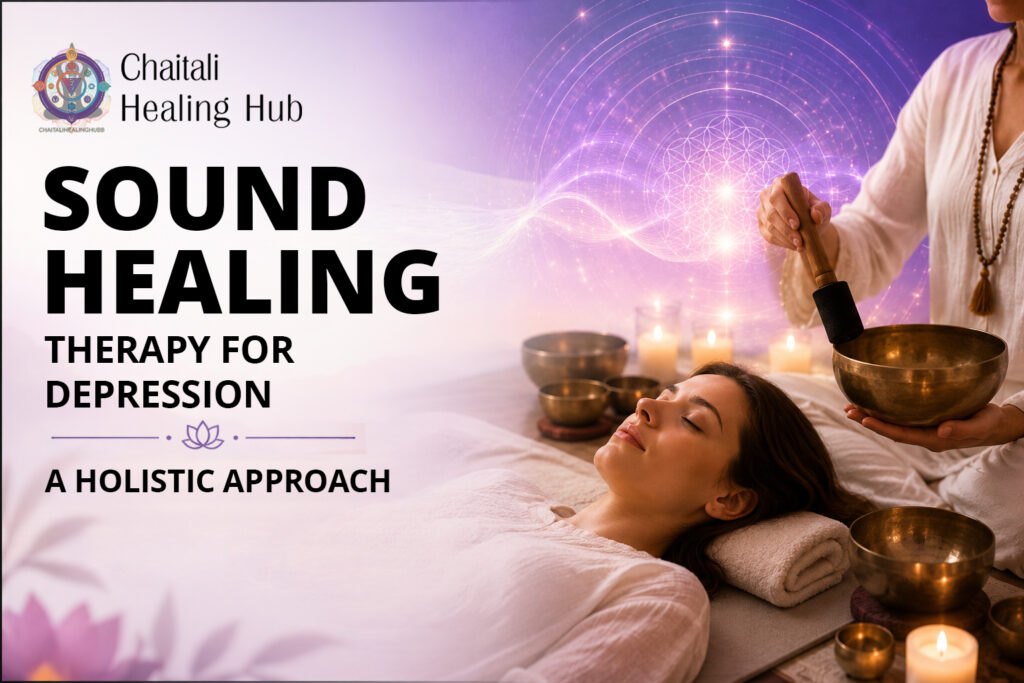
Depression rarely announces itself all at once. It builds slowly — in the form of low energy, disturbed sleep and disconnection from people you love, and a heaviness that doesn’t seem to lift no matter how much rest you get. While therapy and medication remain essential tools for many, a growing number of people are turning to complementary, body-based practices to support their emotional recovery. One such practice is sound healing therapy for depression — a gentle, non-invasive approach that uses vibration and frequency to calm the nervous system and restore emotional balance.
At Chaitali Healing Hubb in Mumbai, this holistic approach has helped many individuals find a sense of calm and clarity that talk-based methods alone did not fully provide. This blog explores what sound healing is, how it supports people living with depression, and what a session actually looks like.
1. Understanding Depression and Why a Holistic Approach Helps
Depression is not just a mental state — it is a whole-body experience. It affects sleep, appetite, muscle tension, breathing patterns, and even posture. Conventional treatment focuses primarily on the mind, but the nervous system also needs direct, physical support to reset itself.
A holistic approach recognizes that healing happens on multiple levels at once — emotional, physical, and energetic. This is where practices like sound healing and tuning fork therapy add real value, working alongside (not replacing) professional mental health care.
2. What Is Sound Healing Therapy?
Sound healing therapy uses instruments such as crystal singing bowls, tuning forks, and resonant tones to create vibrations that the body absorbs on a physical and energetic level. Unlike music therapy, which focuses on emotional response to melody, sound healing is built around specific frequencies that are believed to help regulate the nervous system. You can read more about the practice on our dedicated Sound Healing Therapy in Mumbai page.
During a session, the client typically lies down in a quiet, comfortable space while the practitioner uses instruments around the body to produce a steady, layered soundscape. Many people describe the immediate effect as a deep, almost involuntary sense of relaxation.
3. How Sound Healing Supports People Living with Depression
Depression is often linked to a nervous system stuck in a state of stress or shutdown. Sound healing works primarily through the vagus nerve and the body’s relaxation response, encouraging a shift out of this stuck state. Common reported benefits include:
- A noticeable reduction in anxious, racing thoughts during and after sessions
- Improved sleep quality, which is often disrupted during depressive episodes
- A greater sense of emotional release, especially for people who find it hard to verbalize what they feel
- Lower physical tension in the shoulders, jaw, and chest — areas that often hold stress
- A gentle return of energy and motivation over consistent sessions
4. The Science Behind Sound Frequencies and Mood
Research into sound and vibrational therapy is still developing, but early studies suggest that specific frequencies can influence brainwave activity, shifting the brain from a high-alert beta state into calmer alpha and theta states — the same states associated with meditation and deep rest. This shift is thought to lower cortisol levels and support the body’s natural mood-regulating processes, which is why sound healing is increasingly used as a complementary tool alongside conventional depression care rather than a replacement for it.
5. What to Expect in a Sound Healing Session for Depression
A first session usually begins with a short, judgment-free conversation about how you have been feeling, followed by the healing session itself. Many clients say they don’t need to explain much — the space itself feels calming from the moment they arrive.
For those experiencing depression alongside physical symptoms such as chronic tension or fatigue, combining sound sessions with Emotional Healing with Tuning Fork Therapy can offer more targeted, whole-body support.
6. Sound Healing vs. Traditional Depression Treatment
Sound healing is not designed to diagnose or treat clinical depression on its own, and it should never replace guidance from a licensed mental health professional. Instead, it works best as a complementary layer of support — helping to calm the nervous system so that therapy, medication, and lifestyle changes can be more effective. Many clients find that entering therapy sessions feels easier after their body has already been guided into a calmer state.
7. Who Can Benefit from This Therapy
Sound healing is gentle and non-invasive, which makes it accessible to most people, including those who are new to holistic healing and unsure where to start. It can be especially helpful for:
- People experiencing mild to moderate depressive symptoms, alongside professional care
- Individuals dealing with high stress, burnout, or emotional exhaustion
- Those who find it difficult to process emotions verbally
- Anyone looking for a calming, natural addition to their existing wellness routine
8. Simple Tips to Support Your Healing Journey
- Come to your session with an open mind rather than specific expectations
- Stay consistent — the cumulative effect of regular sessions is often more noticeable than a single visit
- Pair sessions with basic self-care habits like hydration, sleep, and gentle movement
- Continue any therapy or medical treatment your mental health professional has recommended
Ready to Begin Your Healing Journey?
Depression can feel isolating, but healing is rarely a single-path journey. At Chaitali Healing Hubb, our sound healing sessions are designed to gently support your emotional wellbeing alongside the care you already receive.
If you are ready to experience a calmer mind and a more balanced sense of self, book your 1:1 session with Chaitali Healing Hubb today and take the first step toward holistic emotional balance.