
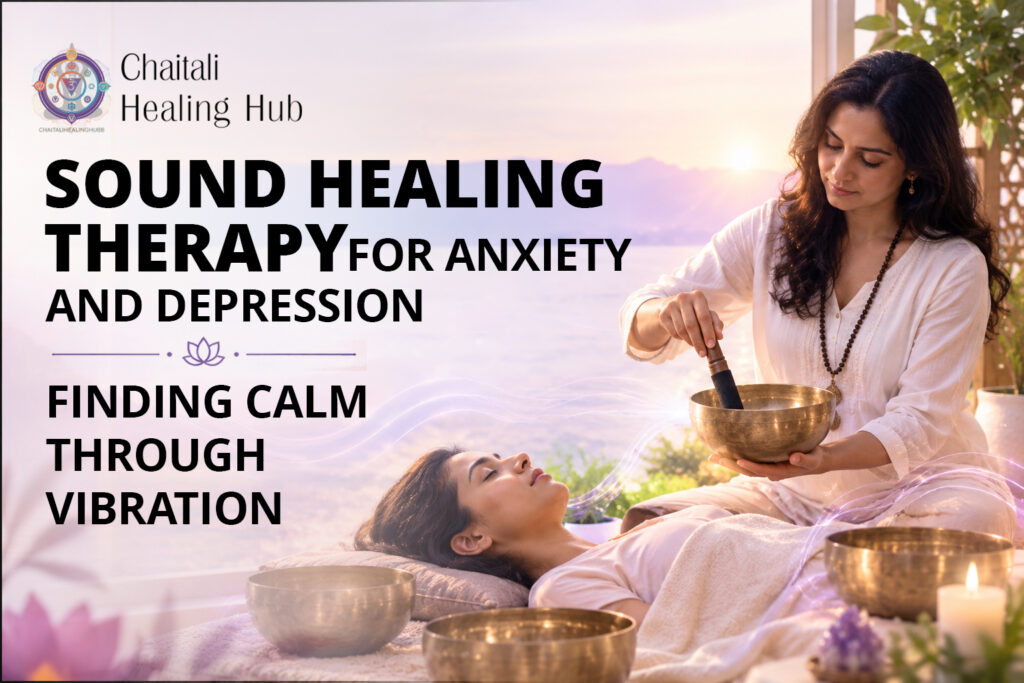
In a world that rarely pauses, feelings of anxiety and low mood have quietly become part of everyday life for many people. Racing thoughts, disturbed sleep, and a persistent sense of unease are signs that the nervous system is overwhelmed and searching for balance. Sound healing therapy offers a gentle, non-invasive way to work with the body rather than against it, using carefully chosen tones, singing bowls, and resonant frequencies to guide the mind out of a state of alert and into one of rest. Unlike approaches that rely on words or willpower alone, sound healing therapy speaks directly to the nervous system through vibration, entrainment, and rhythm — the same instincts that once soothed us to sleep as infants. At Chaitali Healing Hubb, sessions are designed as a quiet space to slow down, breathe, and let sound do the work of settling an overactive mind. Whether someone is dealing with the tight chest and racing heart of anxiety or the heavy, muted fog often associated with depression, this therapy doesn’t ask them to think their way out of it — it invites the body to release tension physically, one wave of sound at a time. That shift, from constant mental effort to embodied stillness, is often where real relief begins.
Anxiety tends to live in the body as much as the mind — shallow breathing, clenched shoulders, a nervous system stuck in fight-or-flight. Sound healing therapy for anxiety works by using specific frequencies and rhythmic tones to interrupt that cycle, encouraging the brainwaves to shift from the fast, scattered activity of stress into slower, calmer patterns associated with relaxation. Instruments like Tibetan singing bowls, chimes, and gongs create layered vibrations that the body can feel as much as hear, which helps draw attention away from anxious thought loops and back into physical sensation. Many people describe the effect as similar to a long exhale — a gradual loosening of tension they didn’t realise they were holding. Regular sessions can also support better sleep, steadier breathing patterns, and a greater sense of groundedness in day-to-day situations that would otherwise feel overwhelming. Because it works with the nervous system directly rather than through analysis or conversation, sound healing therapy for anxiety is often a welcome complement for those who find it hard to “talk through” their worries, offering a quieter, more sensory route back to calm.
Depression often brings with it a sense of heaviness, disconnection, and low energy that can be difficult to shift through effort alone. Sound healing therapy for depression approaches this differently, using resonant frequencies to gently stimulate the body’s energy and awaken a sense of presence without forcing positivity or pushing the mind to “snap out of it.” The vibrations from singing bowls, tuning forks, and other sound tools can help ease the physical stagnation that often accompanies low mood — a kind of gentle internal movement that mirrors emotional release. For many, the experience is less about instant transformation and more about consistent, cumulative shifts: a little more clarity after each session, a little more willingness to feel rather than numb. Sound healing also creates a rare pocket of stillness in an otherwise noisy world, giving the mind space to rest without the pressure to perform or explain itself. While it is not a replacement for professional mental health care, sound healing therapy for depression can be a valuable, calming addition to a broader wellness routine — one that honours the fact that healing doesn’t always have to happen through words.
A typical sound healing session at Chaitali Healing Hubb begins with a few minutes of quiet breathing to settle into the space, followed by a guided journey through layered tones from singing bowls, tuning forks, and other resonant instruments. There’s nothing to do but lie back, breathe, and let the sound move through the body — no performance, no pressure, just permission to rest. Many clients notice a lighter, calmer feeling immediately after a session, while others find the benefits build gradually with regular visits, particularly for anxiety and depression, which often respond well to consistent care over time. It’s worth noting that sound healing therapy is a complementary wellness practice, not a substitute for medical or psychological treatment, and anyone managing a diagnosed condition should continue working alongside their doctor or therapist. For those simply looking for a moment of genuine stillness in a busy life, though, it offers something increasingly rare: a space to simply be. If anxiety or low mood has been weighing on you, a single session might be the gentle reset you didn’t know you needed — book your sound healing session today and experience it for yourself.
Disclaimer: Sound healing and tuning fork therapy are complementary wellness practices and are not a substitute for professional medical or psychological diagnosis and treatment. Please consult a qualified healthcare provider for any medical condition.
